
Marupoyo Beginner Guide: Roll Before You Run
Start Marupoyo the right way: how tilting, braking and momentum work, when to use Family Mode, and the collecting habits that save hours.
The first ten minutes of Marupoyo can feel like a trick. You push in a direction and the chick does not dash; the ground tilts, gravity takes over, and the little bird rolls faster than you expected. New players usually blame the controls. The controls are fine. The game is asking you to think like a ball, not like a character with running shoes. The controls guide→ goes deeper on tilt, brake and momentum once you have the basics.
This Marupoyo beginner guide covers the mental shift, the brake, the two modes, and the collecting habits worth forming before you leave the forest. It avoids level-specific spoilers and does not pretend there is a hidden jump button. There is not. The sooner that clicks, the sooner the game becomes relaxing rather than slippery.
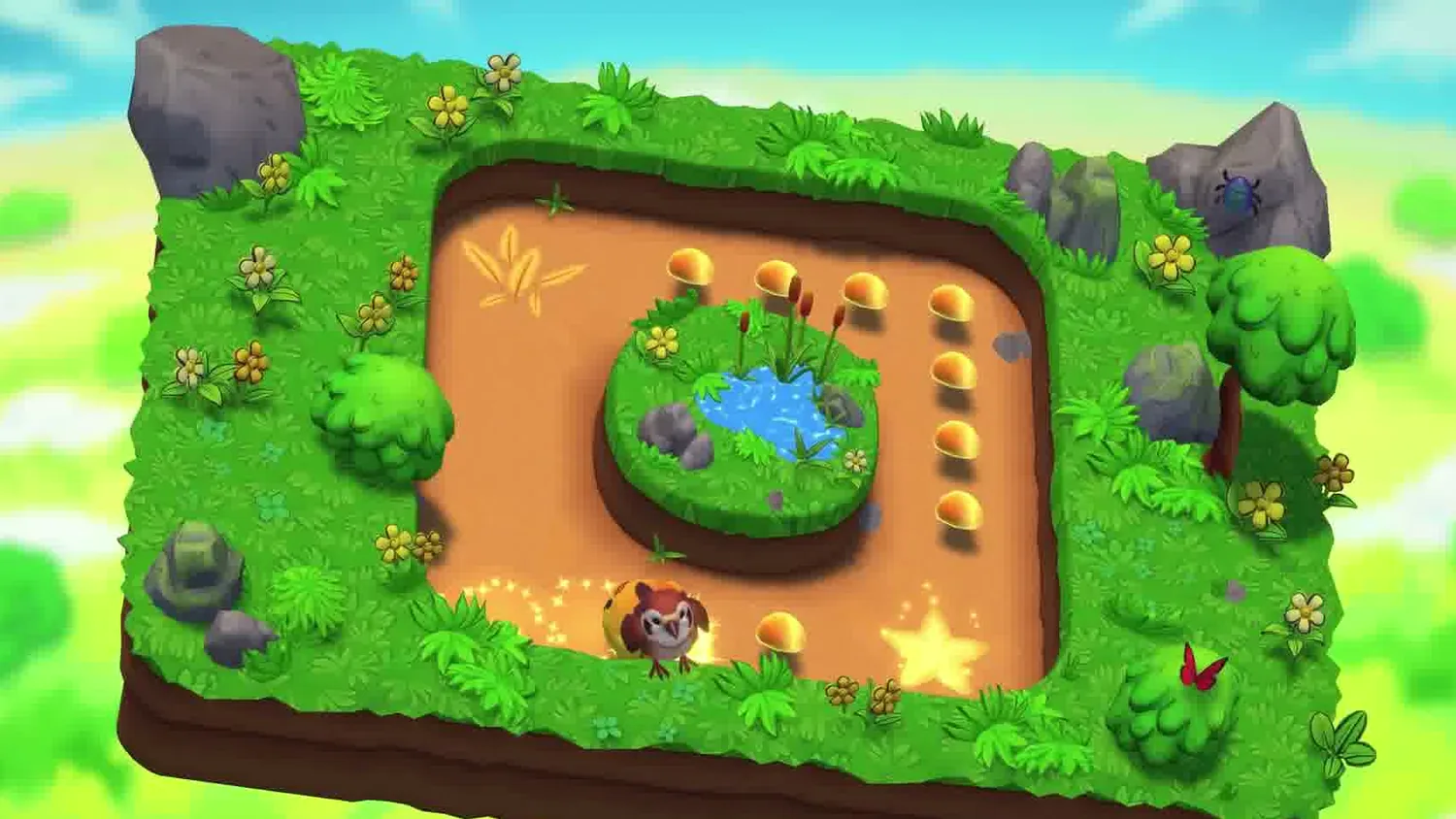
Tilt the world, not the chick
Marupoyo is a tilt-based platformer. On Switch 2 you can use motion controls; on PlayStation 5 the DualSense's motion sensor is supported; on Steam you will want a controller that reports motion if you want the intended feel. The stage responds to your tilt, and the chick rolls downhill. That single sentence explains most of the game's friction and most of its charm.
Because you are tilting a surface rather than steering a character, small inputs have long consequences. A quick flick starts a roll that keeps going after you stop. A steep slope accelerates you beyond the camera's comfortable reading speed. The skill is not reacting faster; it is choosing a line early and letting the level do the work.
If the motion controls are not comfortable, use the stick and treat the tilt as an analog steering axis. The game supports both, and the Marupoyo controls guide→ goes deeper into the brake, camera and accessibility options.
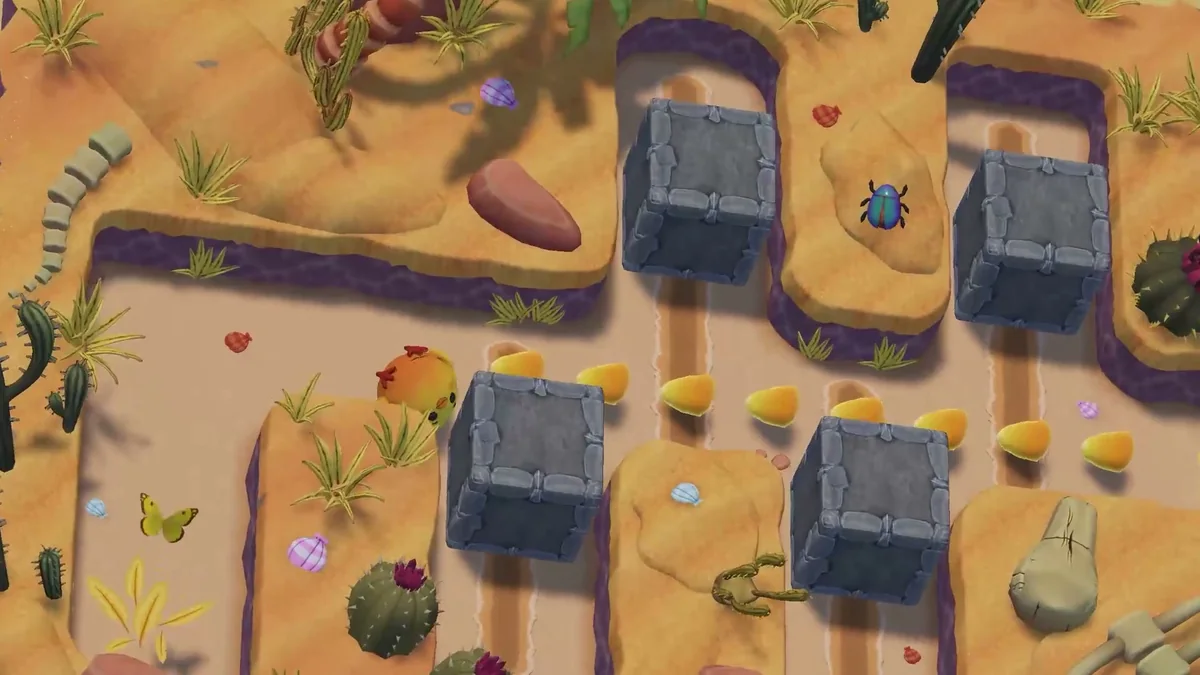
The brake is your only real button
PlayStation and Nintendo both describe braking as the only additional action beyond rolling. That makes the brake the most important input in the game. It is not a panic button. It is a planning tool. Tap it to shed a little speed before a corner, hold it to stop on a ledge, and release it to let gravity resume.
The mistake is braking late. By the time the chick is already airborne, the brake cannot help; momentum has committed you. Learn the visual cues for a drop: the lip of a platform, a change in the grass colour, a shadow that falls away. Brake before the lip, not over it.
Braking also matters for medals. One of the Gamer Mode badges is awarded for never braking during a stage, which sounds like a contradiction until you realise it is a routing challenge: the level is asking whether you can plan a line that needs no correction. Do not chase that badge on your first pass.
Pick a mode and stop worrying about it
Family Mode is the gentler design. The game slows down, cotton-like clouds cover the hazards that would otherwise reset you, and death is removed entirely. That last part is not marketing language: the mode is built so that a child or a new player can finish a level without a fail state. Lava still looks dramatic, but it loses its intimidation.
Gamer Mode is the version most guide videos will use. The pace returns, every hazard is active, and Time Attack targets appear. You also get the no-lost-lives badge and the no-brake badge as optional goals. If you want the platinum or all twelve achievements, you will eventually need Gamer Mode for the relevant tasks.
You do not have to choose once and suffer. Play the layout in Family Mode, learn where the corn is, then replay in Gamer Mode with a route. The Family Mode vs Gamer Mode guide→ breaks down every difference, including the ones that affect collectibles.
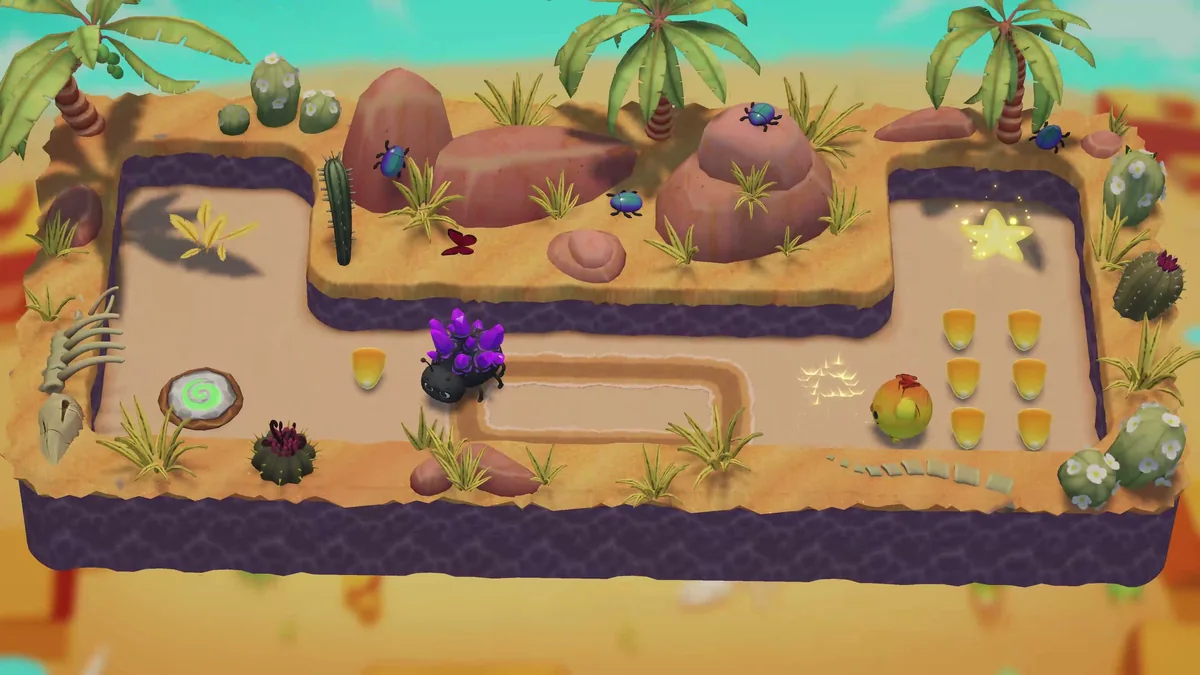
Form three habits early
The first habit is to look behind you. Corn is often placed on the return leg of a loop, slightly off the natural forward line. A level that seems to end with 90% corn usually has a cluster behind a ramp or under a ledge you rolled past. Before you chase a missing kernel for ten minutes, roll the stage backwards once.
The second habit is to finish a level before you optimise it. Medals are tied to corn percentage, Time Attack and challenge objectives, not to how stylish the run looked. A messy clear that collects everything is worth more than a clean clear that misses half the corn.
The third habit is to check the pause menu for control reminders. Marupoyo includes control reminders and a motion-sickness option that turns off floor movement, which is useful if the tilting camera disagrees with you. Those options are part of the design, not a failure.
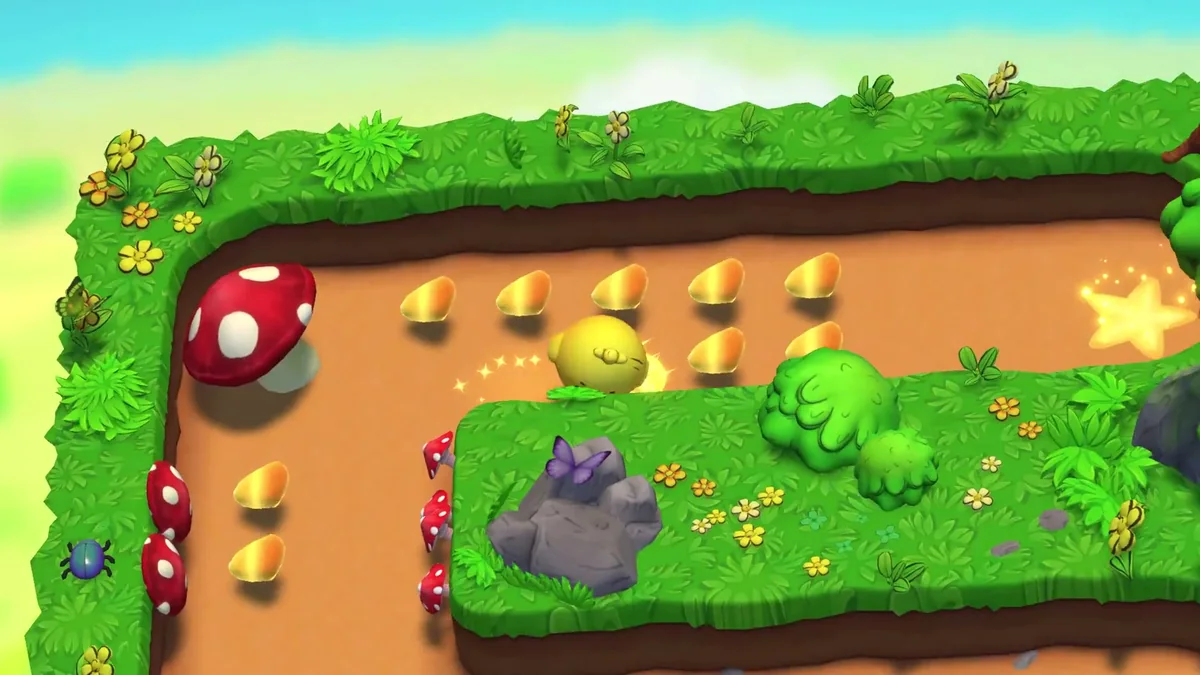
What to ignore on your first run
Ignore the hidden music tracks. They are real collectibles and they matter for the Queen's Pride objective, but they are placed for players who already know a level's shape. Hunting them on a blind first pass turns a pleasant roll into a wall-hugging session.
Ignore the no-brake badge. Ignore the target times. Ignore the idea that you need to rescue every sibling in order. The campaign gives you the worlds in sequence, and the family reunion is a story destination, not a checklist you can fail.
What you should not ignore is the temptation to fight the physics. If a slope keeps throwing you into the same pit, the answer is usually a different approach line, not more speed. Slow down, brake earlier, and let the chick roll across the slope instead of into it.
When to use this wiki
Use the world pages when a specific layout blocks you. Use the all-worlds guide→ when you want the order and the hazard language in one place. Use the 100% completion guide→ when you are ready to clean up, and the achievements guide→ when you want to know which tasks are worth combining in a single run.
The game is small enough that you can finish it without a guide. This site exists to remove the two or three afternoons of confusion that come from misunderstanding the tilt, not to play it for you.
Brake before the corner, not during it. Most early mistakes come from waiting too long to slow down, not from choosing the wrong route.
FAQ
Does Marupoyo have a jump button?
No. The chick rolls, and ramps or bumps launch her. PlayStation and Nintendo describe braking as the only additional action, so there is no dedicated jump input to learn.
Should I start in Family Mode?
Yes, if you are new to tilt controls or playing with a child. Family Mode removes death and slows the game, which makes it a low-pressure way to learn layouts before switching to Gamer Mode.
Do collectibles carry over between modes?
Corn and story progress are tracked per save, and the mode you choose changes hazards and pacing rather than the level's layout. Replaying a level in Gamer Mode is the normal way to pick up a medal objective you missed.
How many levels are in the game?
The campaign has 120 levels across six worlds. The game does not publish an official playtime, and a completion run takes considerably longer than a straight clear.
Official source: Marupoyo on Steam ↗
Related
- Marupoyo Wiki: Your Guide to the Round Chick's Adventure→
- Marupoyo Controls: Tilt, Brake and Momentum→
- Marupoyo Family Mode vs Gamer Mode Explained→