
Marupoyo Wiki: Guides, Worlds and Completion
A Marupoyo wiki for the round chick's adventure: world walkthroughs, controls, corn, siblings, trophies and platform differences.
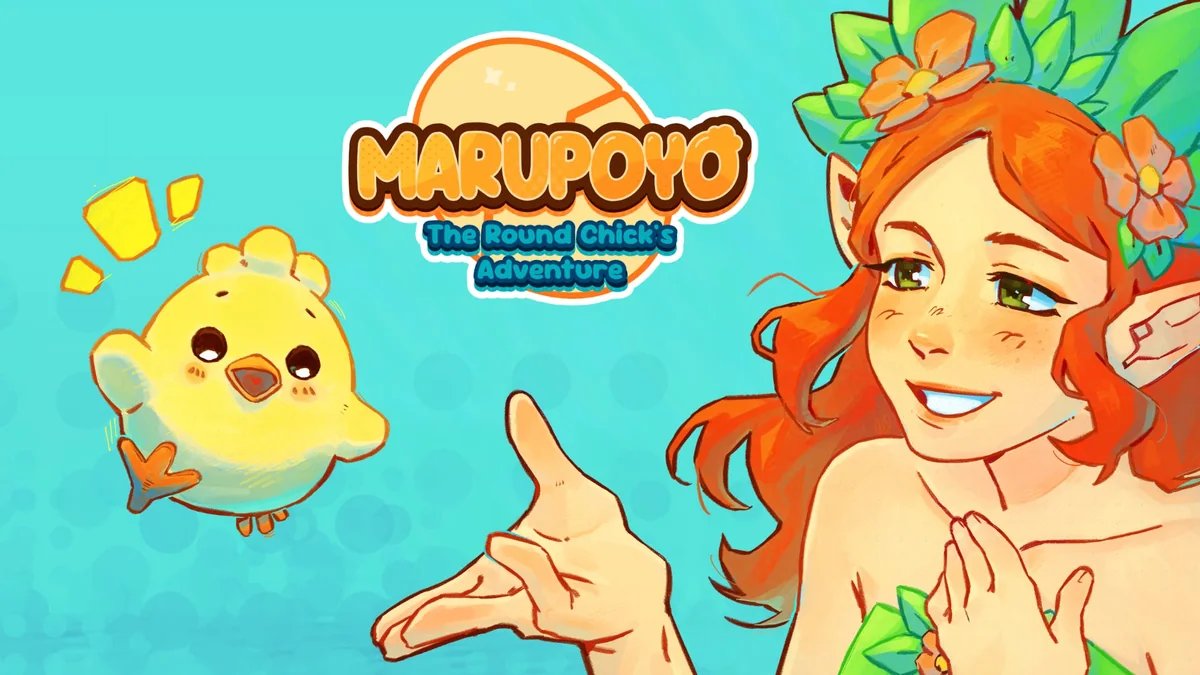
Marupoyo: The Round Chick's Adventure is a tilt-based platformer about a small round bird who rolls through six handmade worlds to bring her scattered family home. It launched on November 26, 2026 for Steam, PlayStation 5 and Nintendo Switch 2, and the whole game is built around one unusual idea: you cannot jump on command. You tilt the world, build momentum, and use the brake when a slope is about to send you somewhere you did not plan. If you are opening the game for the first time, the beginner guide→ explains the rolling model before you touch a level.
This Marupoyo wiki collects what is actually known about the game and turns it into usable routes. There are 120 levels, a corn collectible in every stage, hidden music tracks, Time Attack targets, two difficulty philosophies and a family of chicks to reunite. Below you will find the right guide for each job, plus a clear line between confirmed details and the things the game leaves you to discover.
What this wiki covers
The site is organised around the questions a new player actually asks in the first hour: how the rolling works, whether Family Mode is too easy, where the corn is, and why a level suddenly restarted. The world pages then walk through the six named regions in order, from Bumpy Forest to the Mystery Lair, with the hazards and collectible habits that carry between stages.
If you are completely new, start with the Marupoyo beginner guide→. It explains the tilt-first control scheme, the brake, and the difference between a failed jump and a failed route. If you have already rolled a few levels and want to clean them up, the 100% completion guide→ puts corn, siblings, music and Time Attack into one checklist.
The short version of Marupoyo
- Release date: November 26, 2026, on all three platforms.
- Price: $8.99 on Steam, $9.99 on PlayStation 5, $8.39 on the Nintendo Switch 2 eShop. Steam launched with a 15% discount that brought it to $7.64.
- Structure: 120 levels across six worlds, ending in the Mystery Lair.
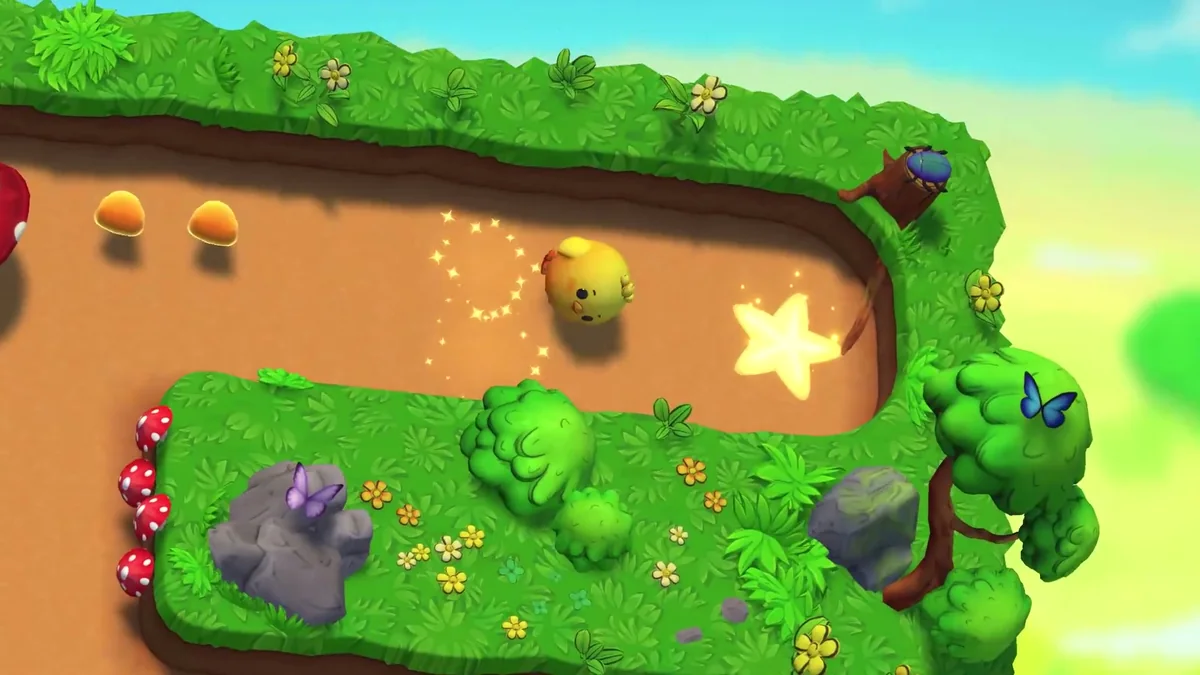
- Core verb: rolling. Tilt the stage to steer; brake to kill speed. Jumps are momentum events off ramps, not a button.
- Modes: Family Mode slows the game and covers hazards with cotton clouds; Gamer Mode restores the speed, adds obstacles and unlocks Time Attack goals.
- Completion: all corn, all siblings, all hidden music, and every Time Attack badge feed the medal objectives. PlayStation adds a platinum trophy on top of the same twelve tasks.
- Demo: a separate free demo exists on Steam. It is not the full game and its store description should not be read as a level count for the demo.
Which guide should you open first?
The fastest route through the site depends on why you are here. A player stuck on a specific world should jump straight to that world page. A player deciding whether to buy should read the Marupoyo review→ and the platform comparison→, because the three versions are close in content but not identical in price, language support or trophy structure.
A completionist should treat the world pages as level maps and the corn guide→ as the collectible layer on top. Corn is not just currency for a shop; finishing a level with every kernel is tied to medals and to the Queen's Pride objective. Missing one kernel near the end of a stage is the most common reason a clean run does not count.
Family Mode is not a difficulty slider
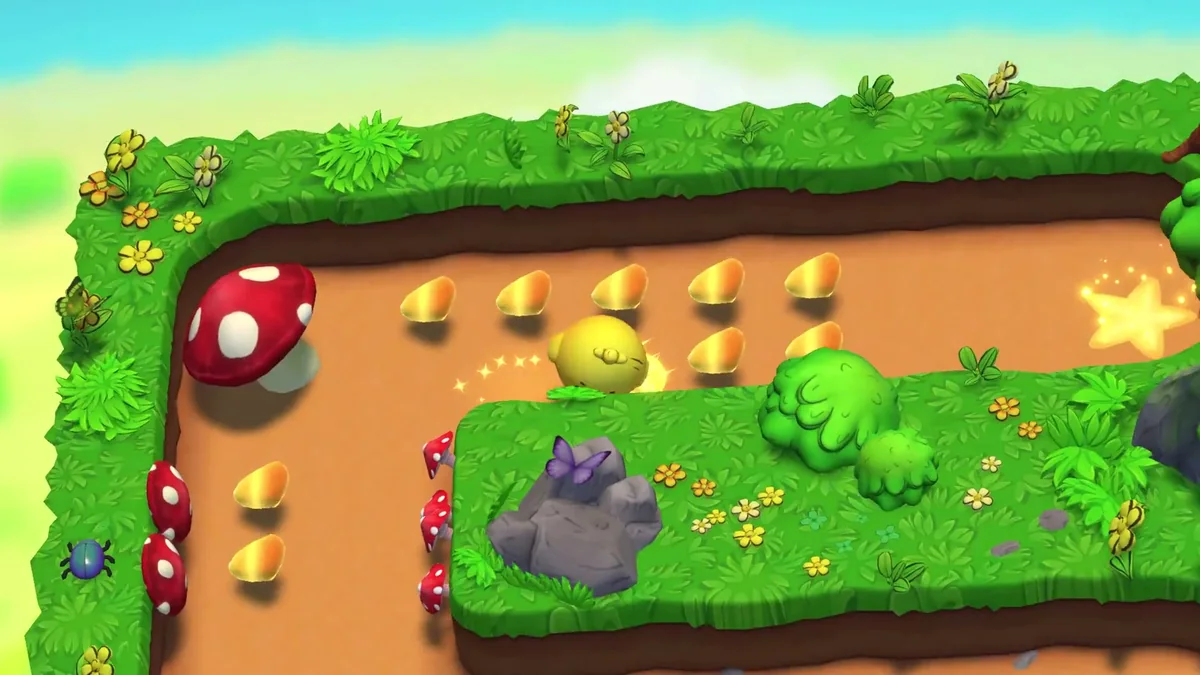
The most useful thing to understand before your first session is that Marupoyo's two modes change the design, not just the numbers. Family Mode is slower and removes death entirely, with soft clouds replacing the hazards that would otherwise reset you. Gamer Mode keeps the hazards, raises the pace and adds target times. Neither mode is a punishment, and you can use Family Mode to learn a layout before returning in Gamer Mode for the medal.
That makes the game unusually friendly to younger players and to anyone who plays in short sessions. It also means a guide written around "the hard route" can be misleading if you are in Family Mode: some shortcuts simply do not exist when the hazard underneath them is covered. The Family Mode vs Gamer Mode guide→ explains the differences without pretending one is the "real" game.
The six worlds at a glance
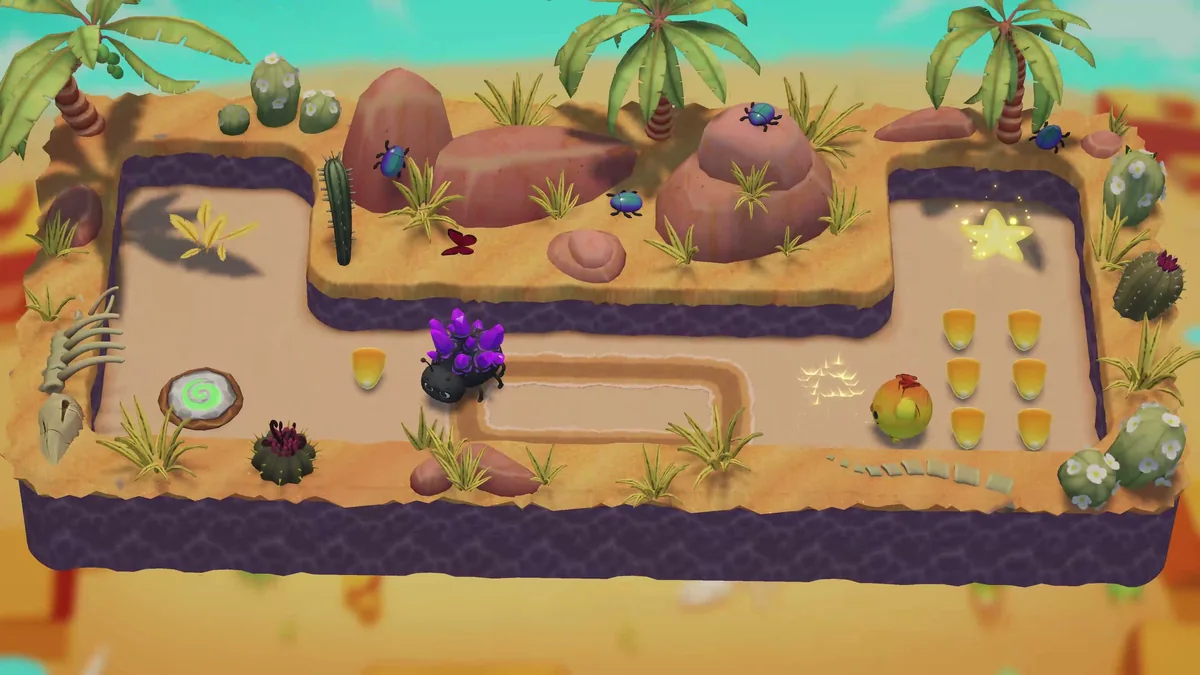
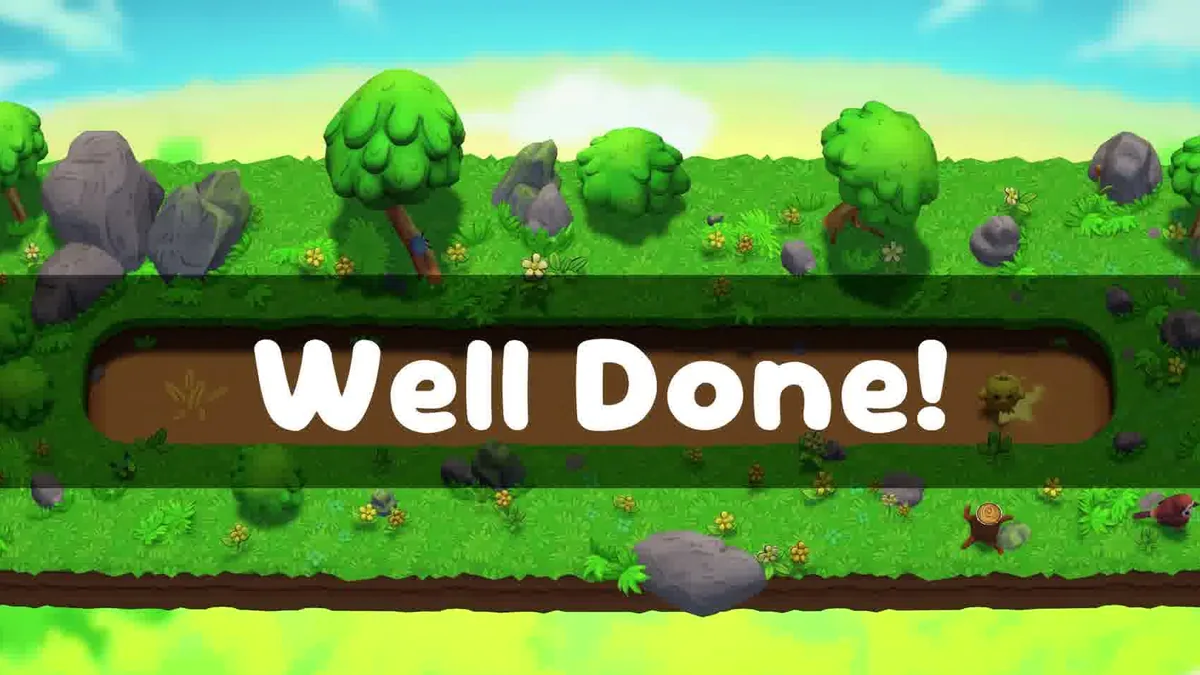
The trophy list gives us the world names in order: Bumpy Forest, Snowy Trail, Streams of Joy, Sand Sungold, Red Volcano and Mystery Lair. Each has a distinct surface language. Forest levels are built around grass, logs and bouncy mushrooms. Snow adds ice and water. The water world leans on currents and ruins. Sand introduces block puzzles and wide open runs. Volcano is the hazard-heavy one, with lava and active enemies. The lair is the final stretch and the home of the exiled Alchemist.
We do not invent level names or boss phases that the game has not shown. Where a page cannot confirm a specific set piece, it says so and gives you the route logic that still applies. That is more useful than a fake map, and it keeps this wiki honest.
Platforms, trophies and the demo
All three versions share the same 120-level campaign. The differences are practical. Switch 2 is the cheapest at $8.39, supports motion controls and runs on a 626 MB install. PlayStation 5 costs $9.99 and has thirteen trophies, including a platinum that the other versions do not have. Steam costs $8.99, supports eighteen languages with full audio, includes Steam Cloud and has twelve achievements. The Steam demo is a separate free app and a good way to test whether the tilt controls feel right on your setup.
The achievements guide→ covers the twelve shared tasks. The trophies guide→ lists the PlayStation names and explains why the platinum changes the completion math. If you are choosing a platform today, the best platform page→ weighs price, portability and trophy appeal rather than declaring a winner in the abstract.
What is still unconfirmed
Marupoyo is a small game that launched today, and some details are still being mapped by players. We have not confirmed a full per-level corn count, the exact number of hidden music tracks, or whether every world ends with a traditional boss. The game's own copy describes a final confrontation with the Alchemist, and the trophy list confirms a Mystery Lair, but it does not name intermediate bosses. This wiki will not fill those gaps with guesses.
What is confirmed is enough to play well: the world order, the control model, the two modes, the collectible systems, the trophy tasks and the platform differences. Everything else is discovery, and discovery is a large part of why the game works.
Brake before the corner, not during it. Most early mistakes come from waiting too long to slow down, not from choosing the wrong route.
FAQ
Is Marupoyo a sequel or a port?
Neither. It is a new game released simultaneously on Steam, PlayStation 5 and Nintendo Switch 2 on November 26, 2026. The three versions were developed in-house by Casual Brothers.
How long is Marupoyo?
The campaign is 120 levels, but the game does not publish an official hour count. A first pass that ignores completion will be much shorter than a run that collects all corn, finds every music track and clears the Time Attack targets.
Can you jump in Marupoyo?
There is no dedicated jump button. The chick rolls, and ramps or bumps launch her. PlayStation and Nintendo both describe braking as the only additional action, so treat height as a momentum problem rather than a platforming input.
Does Marupoyo have a platinum trophy?
Yes, on PlayStation 5. The list has thirteen trophies: one platinum, eleven gold and one silver. Steam has twelve achievements and no platinum equivalent.
Official source: Marupoyo on Steam ↗
Related
- Marupoyo Beginner Guide: Roll Before You Run→
- Marupoyo All Worlds Guide: Order and Hazards→
- Marupoyo Controls: Tilt, Brake and Momentum→