
Marupoyo Family Mode vs Gamer Mode Explained
Family Mode removes death and slows the game; Gamer Mode adds hazards and Time Attack. Here is what actually changes between them.
Marupoyo ships with two ways to play, and the names are slightly misleading. Family Mode is not an easy setting bolted onto the same hazards. It is a different design pass: the game runs slower, soft cotton-like clouds cover the things that would hurt you, and losing a life stops being possible. Gamer Mode is the version with the full hazard set, the faster pace and the Time Attack targets. The beginner guide→ covers the shared movement rules that both modes use.
The choice affects more than pride. It changes which medals are reachable, how much of the level you can safely explore, and whether a missed input costs you thirty seconds or nothing at all. This page separates the two experiences so you can pick the right one for the session you actually have.
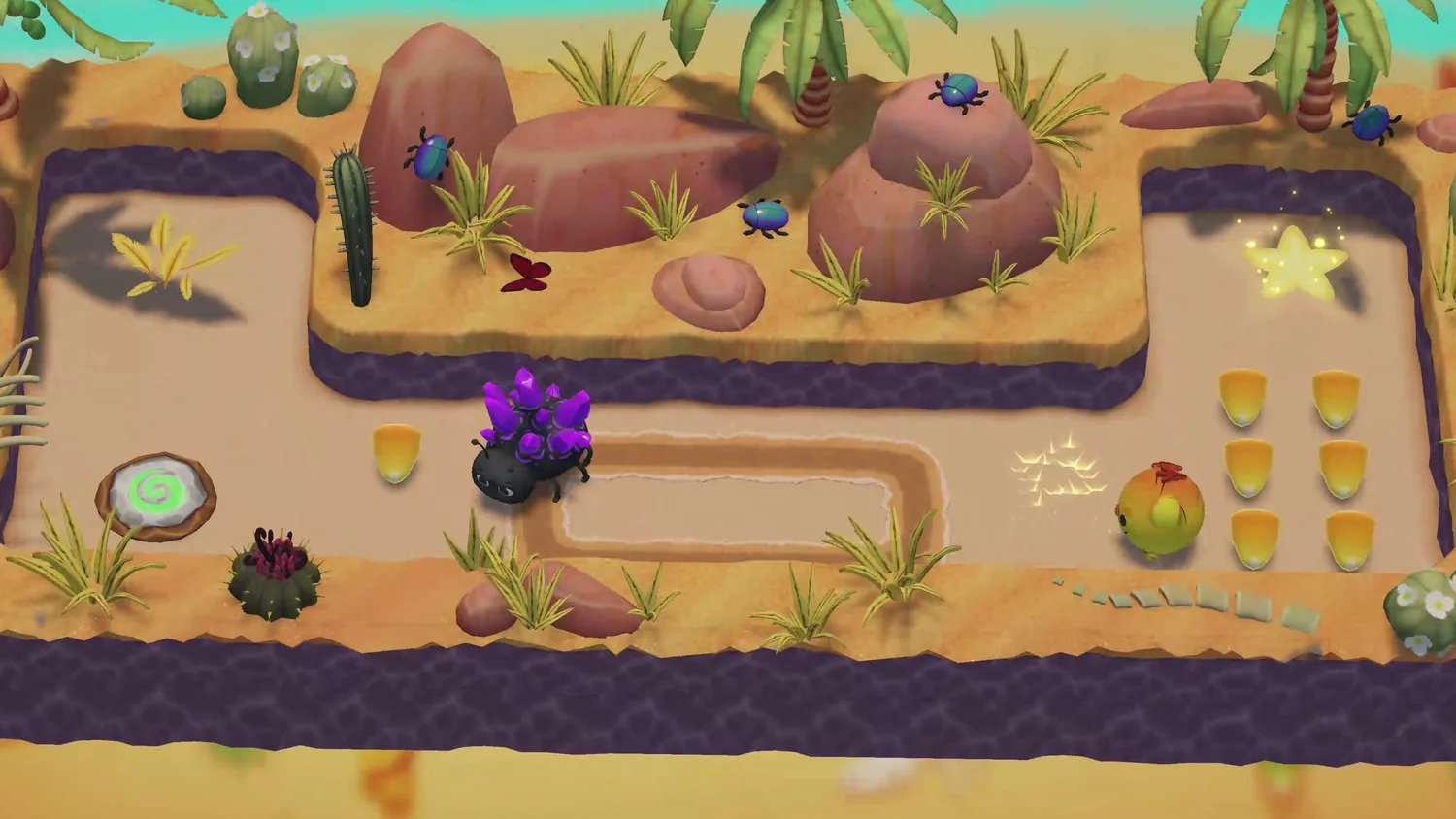
What Family Mode changes
The official description is unusually specific. Family Mode slows the game down, covers hazards with cotton clouds that bounce the chick, and removes death. The last point is the important one: it is not that you have more health, or that checkpoints are more generous. The fail state is designed out of the mode.
That has a knock-on effect on how levels read. A lava field is still visually dramatic, but the intimidation is reduced because the consequence is a bounce rather than a restart. A cliff becomes a soft boundary. A water channel becomes a place to roll across rather than a place to avoid. For a young child, or for an adult who wants to unwind, that is a much better fit than a difficulty slider.
Family Mode is also a legitimate way to learn a layout. You can see where the corn is, which ramps lead where, and how the camera frames a corner, without spending the whole session on the same jump. The trade-off is that some routes are only possible because a hazard is covered, so a Family Mode line may not translate directly to Gamer Mode.
What Gamer Mode adds
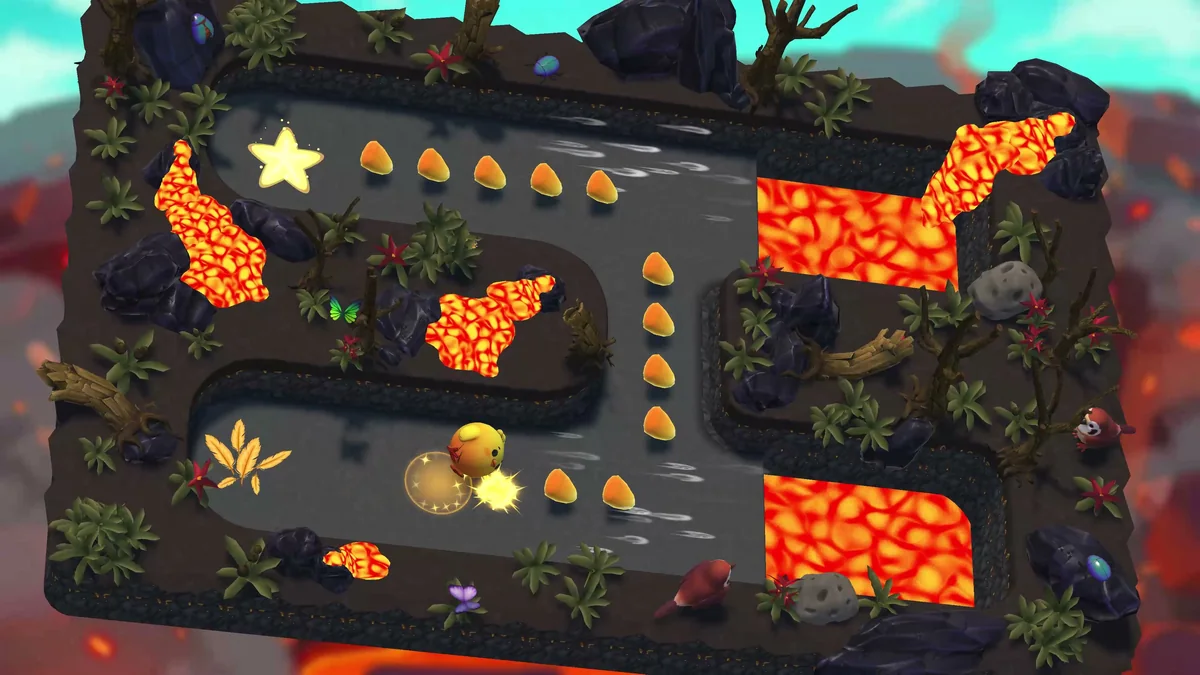
Gamer Mode restores the pace and the hazards. The obstacles that Family Mode covers are active again, and the level expects you to deal with them. It also introduces Time Attack, with target times that award extra corn and a badge when beaten. The mode tracks a no-lost-lives badge and a Pro Player badge for finishing without braking.
Those badges are the reason most completion guides assume Gamer Mode. They are not required to see the ending, and the game does not shame you for staying in Family Mode. But if you want the full medal set, the Time Attack guide→ and the achievements guide→ are written around the faster mode.
The mode names in the trophy list
One small source of confusion: the trophy descriptions refer to "Regular Mode" when describing the no-death clear, while store copy calls the faster mode Gamer Mode. The exact menu label can differ from the marketing label, and the trophy text is the more precise source for the challenge. If you are hunting the trophy, check the mode name on the results screen before assuming you were in the right one.
The safe interpretation is simple: the trophy wants a full campaign clear without losing a life in the standard, hazard-active mode. Family Mode removes death, so a Family Mode clear cannot satisfy a no-death challenge in the intended sense. Do the clean run in the mode where dying is possible.
Which mode should you start with?
Start with Family Mode if any of these apply: you are new to tilt controls, you are playing with a child, you play in short sessions, or the camera motion bothers you. The game is generous enough that you will still see the worlds, the story and most of the collectibles. You can replay individual levels later in Gamer Mode for medals.
Start with Gamer Mode if you have played tilt-based games before, you want the intended pacing, or you are reviewing the game and need to see the hazard design. The first world is a gentle teacher in either mode, so you can switch after twenty minutes without losing much.
There is no penalty for switching. Progress is tied to the save and the level, not to a mode-locked campaign. The main thing you lose is time if you keep replaying the same stage in the wrong mode for the wrong goal.
What does not change
The level count stays at 120. The six worlds stay in the same order. The story beats, the sibling rescues and the Queen's lessons are the same. The corn placements do not move, although some may be easier to reach when a hazard is covered.
The platform differences also stay the same: Switch 2 is the cheapest version, PlayStation 5 has the platinum, and Steam has the largest language list and the demo. Mode choice is separate from platform choice, which is worth remembering if you are buying for a child on one system and collecting trophies on another.
A practical two-pass plan
Use Family Mode for the first pass through a world. Collect corn casually, note the levels that hide a music track, and finish the world. Then switch to Gamer Mode and replay the same levels with a route in mind. You will already know the geometry, so the hazards become the only new variable.
For the no-death trophy, do not attempt it during the learning pass. Pick a world you have already cleared twice, play it in Gamer Mode, and restart the level the moment you lose a life. The trophy tracks the full campaign, so a single careless death late in the run is the expensive kind.
For the no-brake badge, do the opposite: choose a short, simple level and learn it until the route needs no correction. Then extend that discipline to longer stages. Trying to never brake on a blind run is a recipe for frustration.
Brake before the corner, not during it. Most early mistakes come from waiting too long to slow down, not from choosing the wrong route.
FAQ
Does Family Mode remove all hazards?
It covers the hazards that would otherwise reset you with cotton-like clouds and removes death. Lava and other dangerous surfaces still appear, but they become bouncy rather than fatal.
Can you earn trophies in Family Mode?
Some trophies, such as rescuing siblings or collecting corn, are compatible with a relaxed playthrough. The no-death clear and the Time Attack tasks are designed around the standard, hazard-active mode, so plan those separately.
Can you switch modes mid-game?
Yes. The mode is a play option, not a campaign lock. You can replay any level in either mode, which is the intended way to clean up medals after a first pass.
Is Gamer Mode much harder?
It is faster and every hazard is active, but the level layouts are the same. The difficulty comes from speed and consequence rather than from new geometry.
Official source: Marupoyo on PlayStation ↗
Related
- Marupoyo Beginner Guide: Roll Before You Run→
- Marupoyo Time Attack Guide: Beat Every Target→
- Marupoyo Accessibility: Every Option Worth Knowing→